
This week I got a windfall of lemons, and decided to process them immediately. I’ve had the unfortunate experience of my produce being left in a bag and put away somewhere outside of the fridge by a zealous child wanting to quickly clean up, and by the time I find it it’s no longer usable. So I decided to seize the moment. 🙂
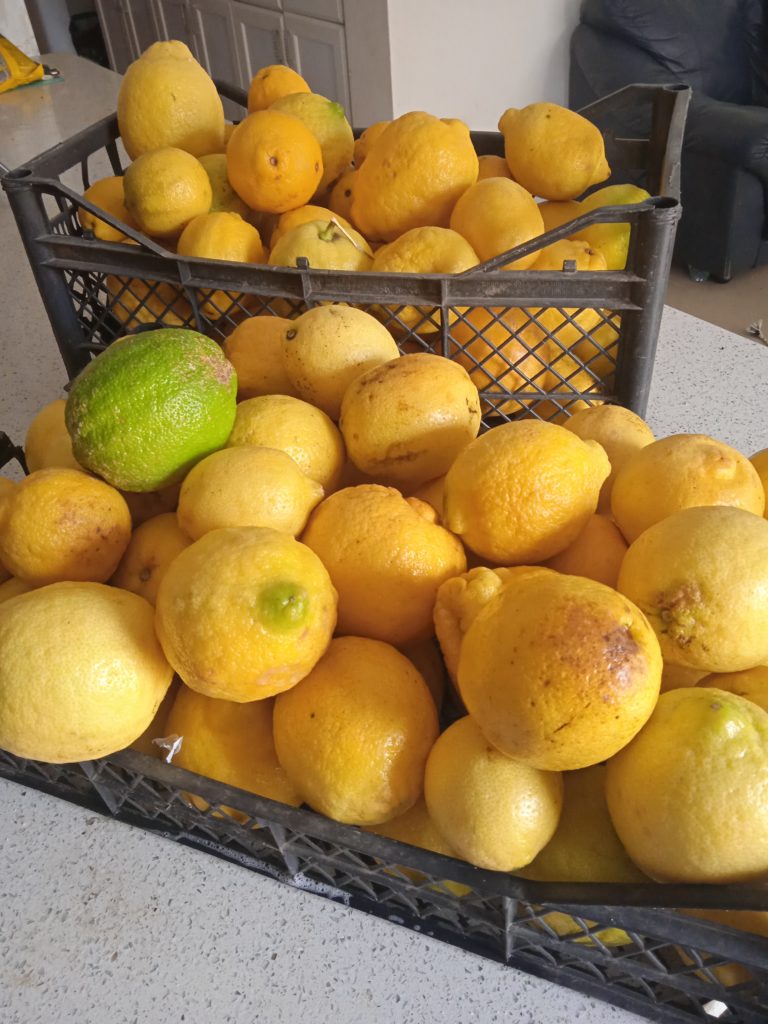
Fortunately, my food processor has a juicer attachment. I bought this food processor about five years ago because the owner told me with the high demands I make of my machine, I would burn out the motor of smaller and less expensive machines. It’s a good machine and has served me well, and the juicer attachment makes a project like this very doable.
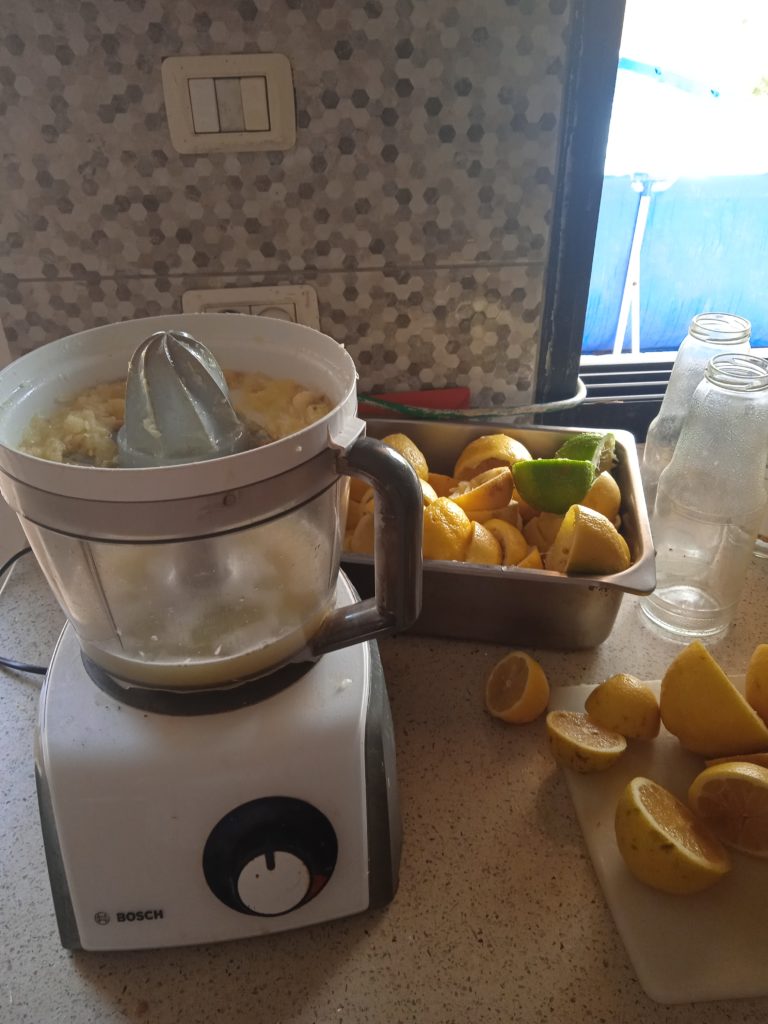
Ds9 saw what I was doing and asked to help, so I put him to work.

At some point ds5 wanted ds9 to join him in the pool, so he went to swim. We have a gated pool in the backyard for our vacation apartment, and this year I considered having just one pool, to simplify maintenance and cut costs. But I decided against the seemingly more frugal option. Having a second pool on the front patio right outside the kitchen window means I can easily keep an eye on them when cooking and makes it possible for them to spend significantly more time swimming than if I had to leave everything to sit with them in the back. They come home tired and irritable from school, and being able to spend so much time in the pool makes our afternoons much more relaxed and enjoyable for everyone.
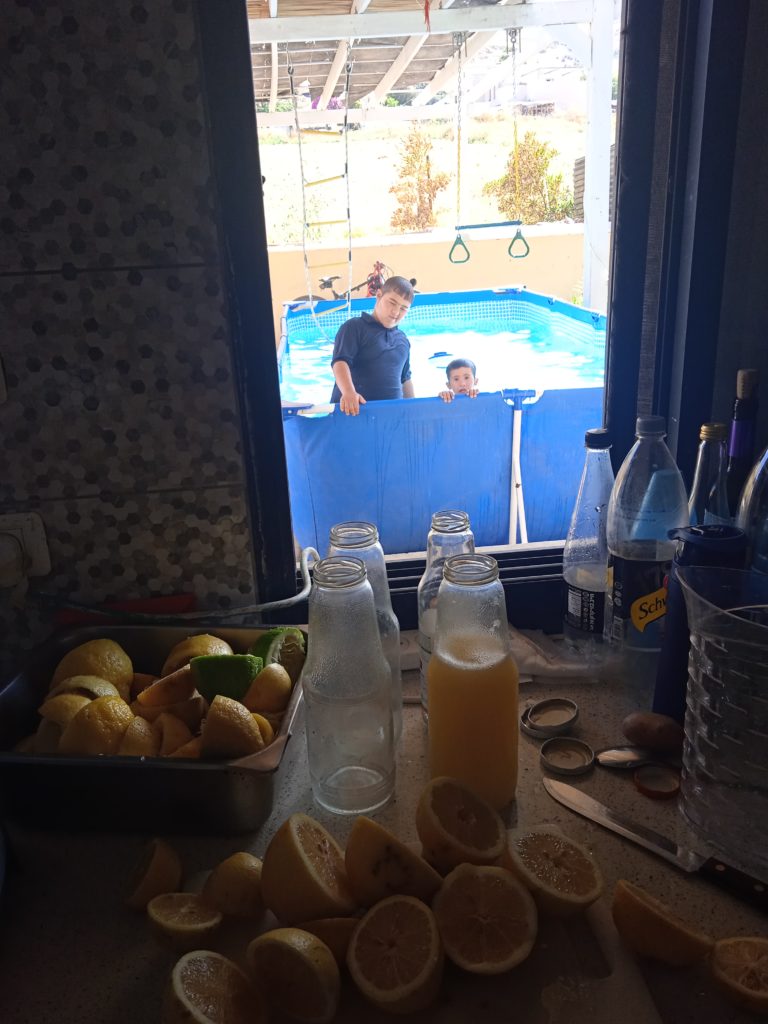
In from swimming and ready to help some more!
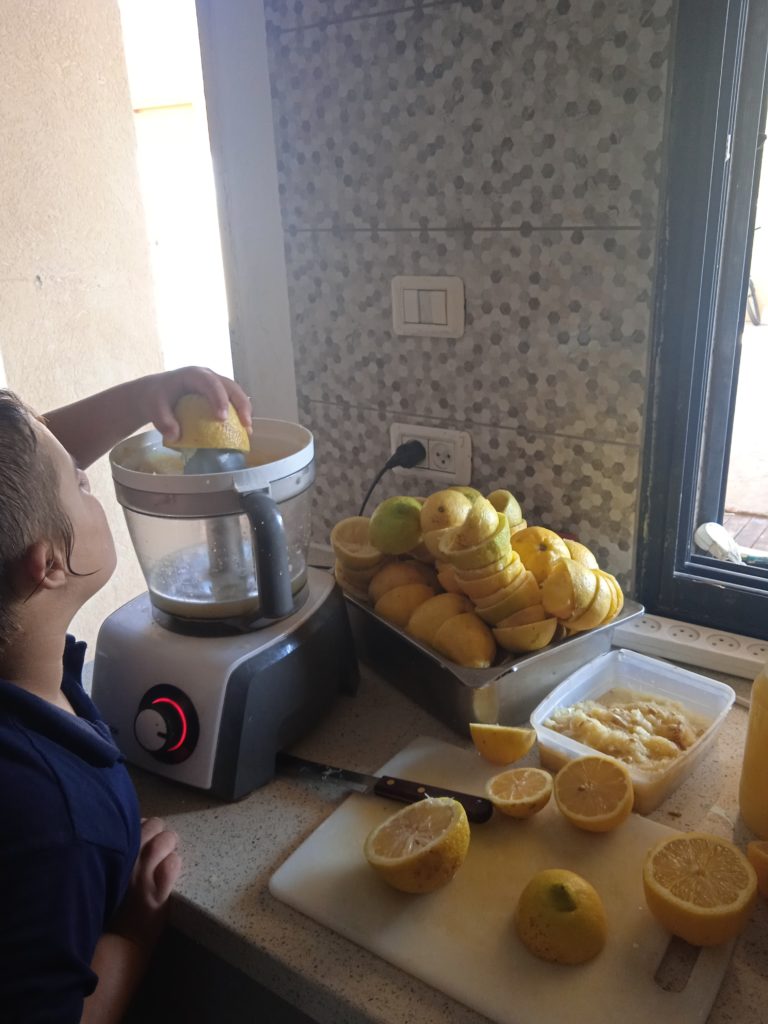
Ds5 wanted a turn, too!
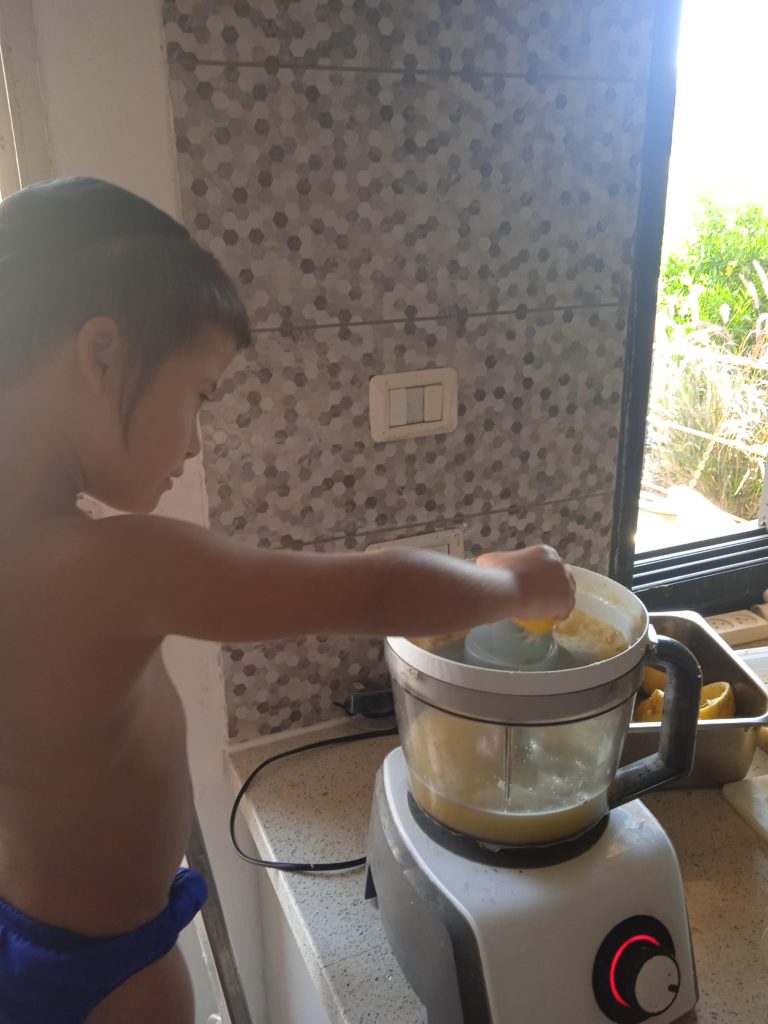
The inexpensive lemon juice I buy at the store is actually watered down citric acid. This fresh lemon juice is delicious – a bit sweet and very flavorful.
Though the juicer attachment strains out most of the pulp, tiny white seeds still go through. When preserving lemon juice by canning, these little seeds can make the finished result bitter. I learned this with my disappointing experiment canning mandarin oranges earlier this year. They were so sweet and tasty eaten fresh, but once I canned them, they were bitter and unappealing – the pith left on them had caused the flavor to change. I opened all the jars of mandarins, turned them into jam and reprocessed them, but honestly they probably are wasting shelf space because we have yet to touch them.
That experience inspired me to be more careful with the little things that don’t seem so important. We used the pulp that came from our second sieving to make lemonade – with the addition of some water and maple syrup, it made a nice drink for a hot day.
This time, the experiment turned out great! Lemon juiced is a high acidity product, so it can be preserved using the water bath canning method. There are two ways to do it, by pouring the juice into the jars hot or cold. If you choose to do the hot pack method, the jars have to be hot before placing hot juice in them, and you then place the jars directly into boiling water. This can be a time savings because you can boil the water while you’re doing something else, but I prefer the cold pack method because there are fewer steps.
After filling the jars with the unheated strained juice, we placed them into a large stockpot. I have a rack for the bottom of mine, but if you don’t you can put a thin towel or washcloth on the bottom so it doesn’t bang around and crack once the water boils.
Cover the jars with about an inch of water, then put the lid on and bring it to a boil. Once the water is boiling, you begin the processing time – in this case, fifteen minutes for quart sized jars. When the time is up, take the jars out and put them on a towel covering the counter – again, this is to protect the jars from cracking.
The preserved lemon juice changed color a bit (I’m guessing if I did hot pack that it wouldn’t have changed as much), but the flavor is excellent. As you can see, even after straining it a second time, there was still pulp left that rose to the top once I processed it. I wasn’t worried about straining out all the pulp – if I was, I would have used a finer sieve. I just shake it before using and it’s all good.
We ended up with a bit over eleven liters of lemon juice.
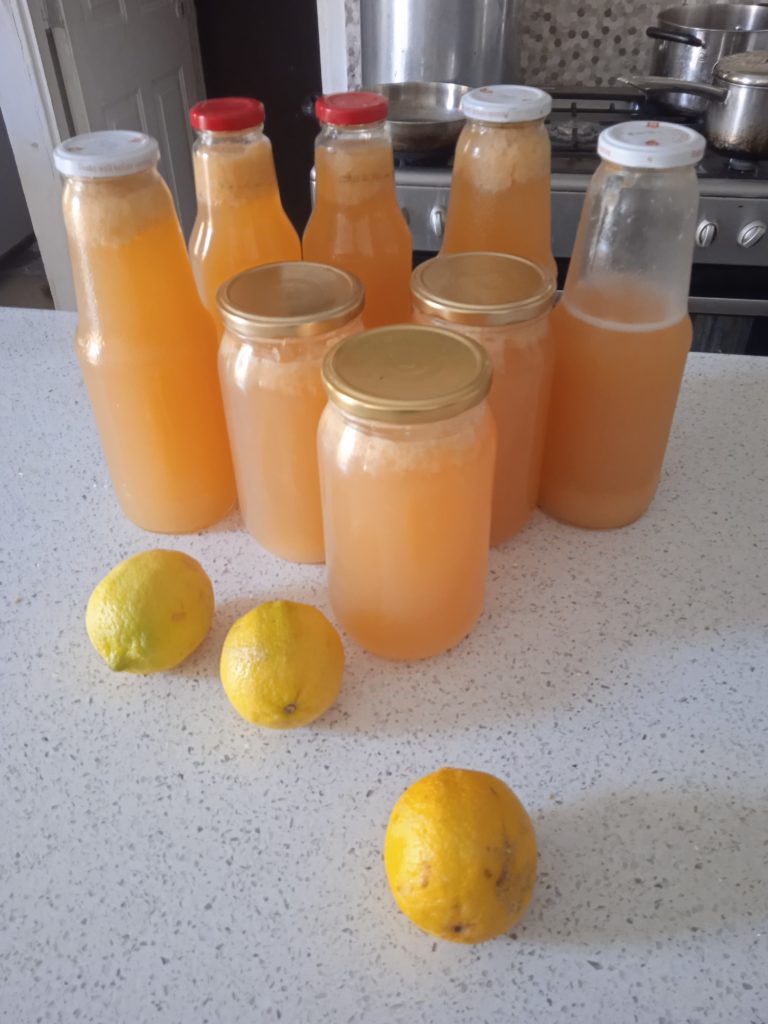
As far as the financial savings – if I compared the cost to eleven liters of the watered down citric acid, making my own saved just 44 shekels. If I compare it to the cost of real lemon juice, it saved much more – over 150 shekels.
That leaves the question, is it worth it to spend the time on this? With my helpers it took about ninety minutes to make the juice. It would have been faster by myself but I consider it a gain when I can double up on the things I want to do and spend time with my children, so I didn’t mind the time spent. I would have had to be available to them during that time in any case.
Now, this equation works because I enjoy activities like this, and I like ending up with a quality product. If I didn’t, this might have felt like drudgery and not worth the time and energy spent.
Avivah
7 Responses
I have a friend who would squeeze (not sure how many cases ) lemons and freeze. They had many bottles for months. The taste is so much better. (no comparison with store bought). Lately I have been using squeezed lemon juice in my salads. It’s really yummy! Love the pool! What fun for the kids!
I’ve frozen lemon juice in the past, but recently had an extended period when my freezer stopped working. Dealing with everything as it was defrosting wasn’t fun and since I didn’t have a neighbor with extra freezer space to use, it created stress in dealing with it before it all spoiled. So that inspired me to be more conscious about not relying on my freezer as much.
I totally agree that there’s no comparison between fresh squeezed and store bought! I also love fresh lemon in my salads. And it’s not only yummy, it’s really good for you.
I’m super grateful to have the pool – it’s really, really hot here and it makes such a big difference for all of us to have it.
I also get lots of lemons from relatives on a moshav. I juice them (with a hand juicer) and freeze the juice in ice-cube bags. That way it stays delicious and I can defrost as much or little as I like.
BTW if they were fresh from the tree right now, are they already kedushas shviis?
It’s nice to have an in with relatives like that, Miriam! I do something similar when I freeze lemon juice – I freeze the juice in ice cube or mini muffin trays, then bag the frozen cubes/rounds in a ziploc bag and take them out as needed.
These lemons don’t have the status of kedushas shviis.
Lemons picked after Rosh Chodesh Adar or purchased in stores from Rosh Chodesh Iyar have kedushas shvi’is.
I’m wondering where you store the juice and how long it lasts. I was told years ago to drink the juice of one fresh lemon each day to prevent kidney stones. I almost always start my day this way – I never though to prepare any in advance, I wonder if the effect is the same if it’s not fresh.
Thanks for sharing with us!
Good Shabbos
The reason I can the lemon juice is because it’s then preserved for long term use and will last for a long time (probably years, but I use a lot of lemon juice so it will last me a few months).
Though fresh lemon juice is the healthiest, this is also still very good and I would think it would still be helpful regarding prevention of kidney stones.