
I have four children in special ed frameworks, and everyone of them now has at least two official Zoom classes daily. Those are supplemented with additional extracurricular Zooms via school and outside of school being offered at this time to keep the kids interested and busy.
I really appreciate the efforts of the administrations and teachers to help the children maintain a regular routine, and offer an option for them to be busy with. A regular schedule is so important, especially at times of uncertainty and added external stress.
For our family, Zoom classes are a tool that we’re using carefully in micro dosages.
I’ve explained to every one of the teachers that has called to ask about our participation: the online environment is dysregulating, and our children are more edgy after participating, so we will join them very selectively.
Zoom is a highly stimulating environment, visually and auditorily. You can see not just the teacher, but pictures of every participant. Since most participants are children in homes with other people around, you see the child and their family members while the teacher is talking. And often the lines are unmuted and you can hear everyone on the call as well.
Picture a classroom with the teacher teaching at the front. Then she’s joined by ten or fifteen other people next to her, and each of them is talking. Not only that, you can see and hear whatever is happening in their homes at that time. Even if a child felt very connected to his teacher and was interested in the topic – both critical factors for learning – would you expect any child in the world to be able to block out all of that visual and auditory stimulation, and focus on the teacher?
Obviously it would be impossible.
And the poor teacher – it would be so stressful for her to try to hold their attention and effectively convey the material she’s prepared!
I stayed away from Zoom classes for our children during the last go around during covid (other than my one high schooler, for whom it was mandatory and I strongly regret agreeing to that), due to my conviction that it wasn’t a healthy learning environment, as the necessary social and emotional components for meaningful learning were absent.
Now we have long term evidence of what happened for millions of children worldwide using Zoom learning, and the negative impacts of remote learning are still showing up in the classroom years later.
Firstly, the obvious – the kids didn’t learn nearly as much or as well as they had with in-person learning. The negative impacts on learning continue to be felt years later, as students worldwide, compared to students before remote learning, are having much more difficulty in sustaining attention, reading longer texts, and figuring out multi-step directions.
Remote learning led to what was called ‘Zoom fatigue’ – the continued focus on screens, combined with limited physical activity led to mental fatigue, decreased attention spans and reduced retention of the material being taught.
Increased screen dependency – books have been written on the dangers of screens for children, and yet we threw them into a situation that we insisted they sit in front of screens for hours a day. Do we need to assist them in becoming addicted to screens and digital entertainment? Surprise, surprise – now kids are more distracted, and less able to focus and learn.
Mental health issues soared – anxiety, depression and loneliness increased dramatically (not just for children!).
You can say, everyone did the best they could and we didn’t know what would happen. But now we don’t have to guess about the effectiveness of remote learning, because we had a worldwide experiment on school children of all ages, and we can see what happened.
I’m a believer in learning from experience; we don’t have to keep making the same mistakes again and again.
Here’s what we’re doing: instead of attending the Zoom davening with his class, ds13 is davening at shul twice a day, with real live people. Instead of sitting in a class about Pesach, he’s learning mishnayos with my husband about Pesach, and we’re talking about Pesach customs and laws.
I put him on a Zoom class yesterday so he could see his friends after a two week absence from school; I took the other kids on an outing so it was a quiet environment for him, and he enjoyed it. I may do this once a week for him.
Yesterday the principal called to personally invite me to join in a class taking place right then on Zoom (I assume because she heard about my concerns expressed to a teacher the evening before). Since it was a class I was actually interested in, we logged on. Ds13 has a weekly class of outdoor exploration, and on this Zoom his teacher was showing how to cook with foraged ingredients.
I watched together with ds13, ds9, and dd8 for fifteen minutes. We sent the teacher a message to thank him and let him know we intended to make the food he showed us, then logged out.
We headed to the backyard and those three children began picking mallow (chubeza, in Hebrew). We maasered (tithed) it, cleaned it, steamed it, chopped it, mixed it with eggs and seasonings, and fried them into patties, then had them for lunch.
We took a couple of pictures and I sent them to the principal, requesting she forward it to the outdoor experience teacher, thinking he would appreciate knowing we were using what he taught.
She ended up forwarding my email about our activity to the entire school staff (with a comment about what an amazing mother I am), which is why I got a call from the school psychologist right afterward. She also asked me about our Zoom attendance; I briefly shared my desire to keep the kids emotionally regulated, and that Zoom isn’t a big part of that for us.
What are the kids doing, if they aren’t on Zoom classes?
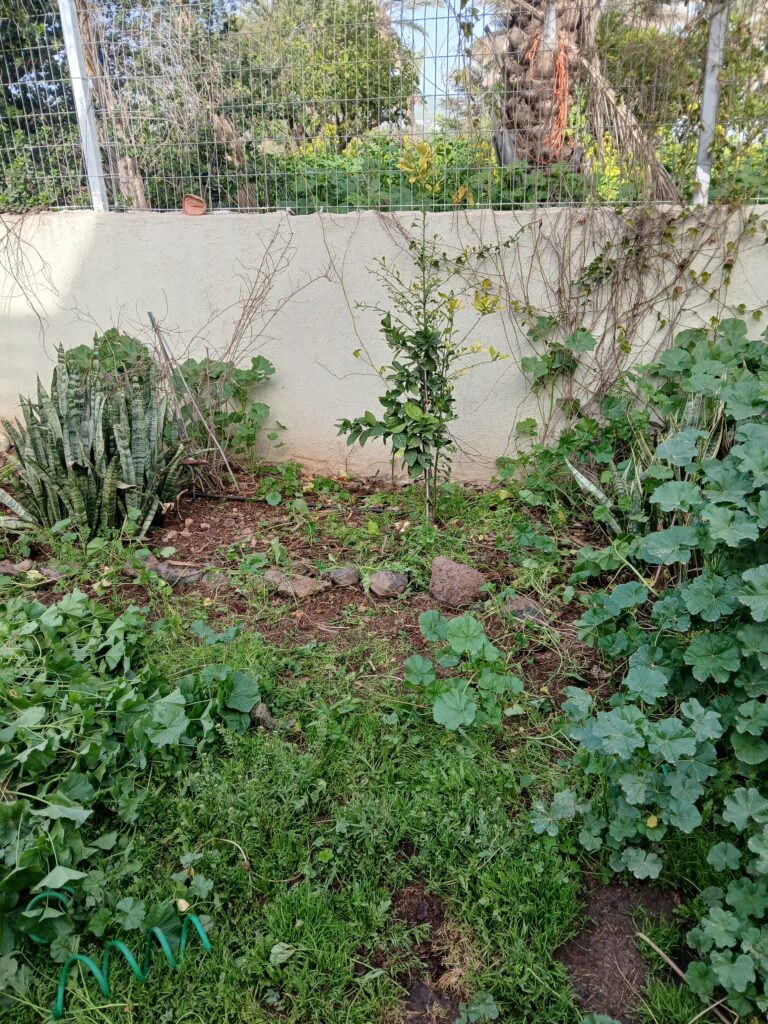
I’m using this time with the kids at home to give them the opportunity to do real things, in a relaxed way. Simple, every day things, not exciting things or specially planned activities – like accompany my huband to walk the dog, or go for shorter walks by themselves with the dog. I taught them to weed the yard; ds13 did a huge amount of work on this and it was so gratifying for him to tame the jungle.
This moment he’s dismantling an old chicken run and cutting apart the wire with metal cutters, after unscrewing the wooden frame with the drill.
The younger kids have been doing lots of simple crafts on their own, cutting and taping and coloring. They’ve spent hours roasting potatoes in a grill together with neighboring kids in the field near our home the last few days. We’ve gone to a park (with a bomb shelter next to it) several times to get together with friends.
They’re helping me prepare food, peeling, chopping, cooking and baking. Dd8 and particularly ds13 are helping clean for Pesach.
When there’s a missile siren, my husband brings his guitar into the reinforced room and he plays while we sing together; the younger three kids sometimes dance while they sing. Sometimes we read books. We have a nice time, then we go out and continue our day. (A couple of days ago, one of the kids protested in dismay when we got the ‘all clear’ to go out, saying he wanted to stay in!)
They are notably happier and calmer than when they are in school – even though there’s a war going on.
Zoom meetings can be a useful supplemental tool, but there’s no way for remote learning to compete with the learning and development possible even during the most relaxed day at home.
Avivah
6 Responses
so many insights! If I’m right, they are notably happier and calmer than when they are in school because there is no rush rush to get to school and back home, with homework and endless school’s request?
I don’t necessarily notice my kids happier or relaxed, but I do see that I am happier and more relaxed. I would appreciate it if there was a 3-4 hour program daily so I can work and have space of mind, though if I had to pack lunches, sign papers, make sure they have uniforms and books ect I don’t know if it is worth it.
My children are in a school system where they have phone school and not zoom. they listen to a pre-recorded lesson usually 5-10 minutes long, and have some work to do at home to follow up. It’s ok , I don’t love it and I wish they would just let them be in school . But BH not disregulating and overwhelming like a live call would be
I think it’s crazy that it’s the first thing the government drops and the last thing to go back to normal. They all have safe spaces and shelters in school, they’ve had drills over the years and I don’t know why the government thinks that it’s completely unnecessary.
One of my granddaughters is also doing phone learning – which I found so strange for a first grader. But she’s a great student and it’s okay for her.
I was in seminary during the Gulf War, and we were all living life as normal, including school children, other than toting around gas masks with us (which were clearly of no protective value for SCUD missile attacks).
I hear you about resuming school, and since you posted, in some areas of the country they’re going back to school. For us, I got a message last night that school won’t resume until after Pesach.
This is honestly a little hard to read because my kids are year-round in Zoom school (no local Jewish schools.) Yes they’re used to it, but I agree with many of the downsides you’ve presented here.
Dina, sometimes we do things that aren’t ideal because that’s what we have available. Zoom can be fine supplementally and selectively.
I have more of a concern when remote learning is presented as a wholesale solution for everyone.
This really made me think about screen time for my kids. They have always been home educated and I find they gain a lot from certain screen time, however usually one that is active (so eg doing maths exercises with a laptop or playing a maths game together). I’ve been sent YouTube videos on certain topics for them for home ed eg history and found to my surprise that they really can’t remember what the videos taught them at all! Sometimes we take them to local historical sites and sometimes all they do is run around but somehow they still learn loads just from the environment whereas the supposedly informational videos do so much less. That’s so interesting!
Also reminded me of why I need to reduce my screen time! Thanks!