Category: Intentional Spending

  • Putting in a bathtub – DIY

    Last winter, my husband wistfully commented a number of times as to how much he wished we had a bathtub; we have four bathrooms but every single one has a shower.

    My husband asked someone who does renovations what would be involved in putting in a bathtub. I didn’t think there was room for a bathtub, and would have assumed even if there was room it would be a huge amount of work and expense, but after this conversation, my husband assured me it was doable.

    We could move the sink to a different wall, and then the bathtub would be placed on the wall where the sink and shower had been.

    The space was a little small but there are bathtubs sized for approximately that space.

    When I was buying tiles for the new kitchen backsplash in the spring, I found one with the right measurements and bought it as a surprise for my husband.

    While he was pleasantly surprised, a bathtub does not a bath make.

    The bathtub sat, and sat and sat.

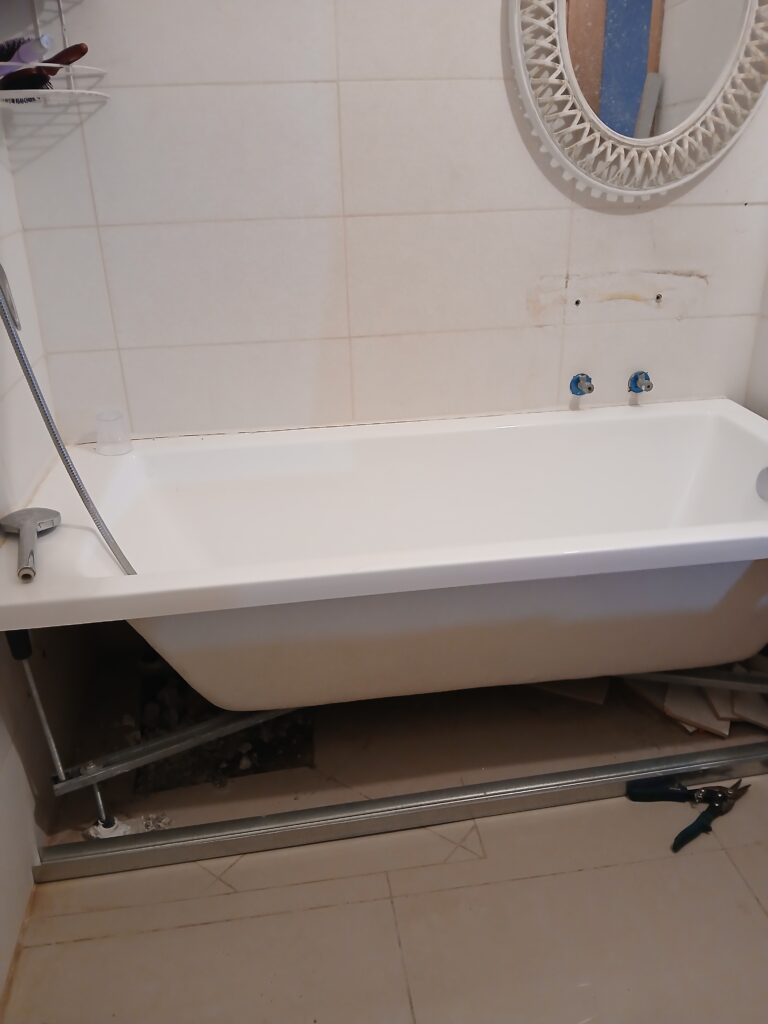
    Months went by, and finally my husband decided to call someone to put it in for us. That person did the plumbing, but said he didn’t have time to do the tiling. The tub was usable, but it was so visually unattractive.

    You can see on the left where the shower was, and on the right where the sink was.

    The new bathtub installed; shower was on the left, the sink was on the right.

    My husband said he would do the tiling but wasn’t sure where to begin. In addition, he works full-time so he really didn’t have much extra time for a project like this.

    We had an added challenge. The current tiling was put in when the house was built, about 14 years ago. So obviously that’s not in stock anymore.

    The floor is a beige with a brown undertone; the tiles are patterned white and silver with a gray undertone. While it looks good together, do you know how difficult it is to find tiles that match both the existing walls and the floors? Not possible at all.

    My husband said we should tile the tub surround plain white. I balked and said we absolutely were not going to do a renovation that looked low grade and dumpy. My suggestion was to retile the entire bathroom and tub surround.

    My husband was understandingly quite unenthused about a project of that scope.

    The solution that met both of our needs was inspired by a different project that is still in progress: the retiling of the laundry room and children’s bathroom. Their bathroom has the same tiles as our bathroom, and though many had been removed by then and were broken in the process, some were still on the wall.

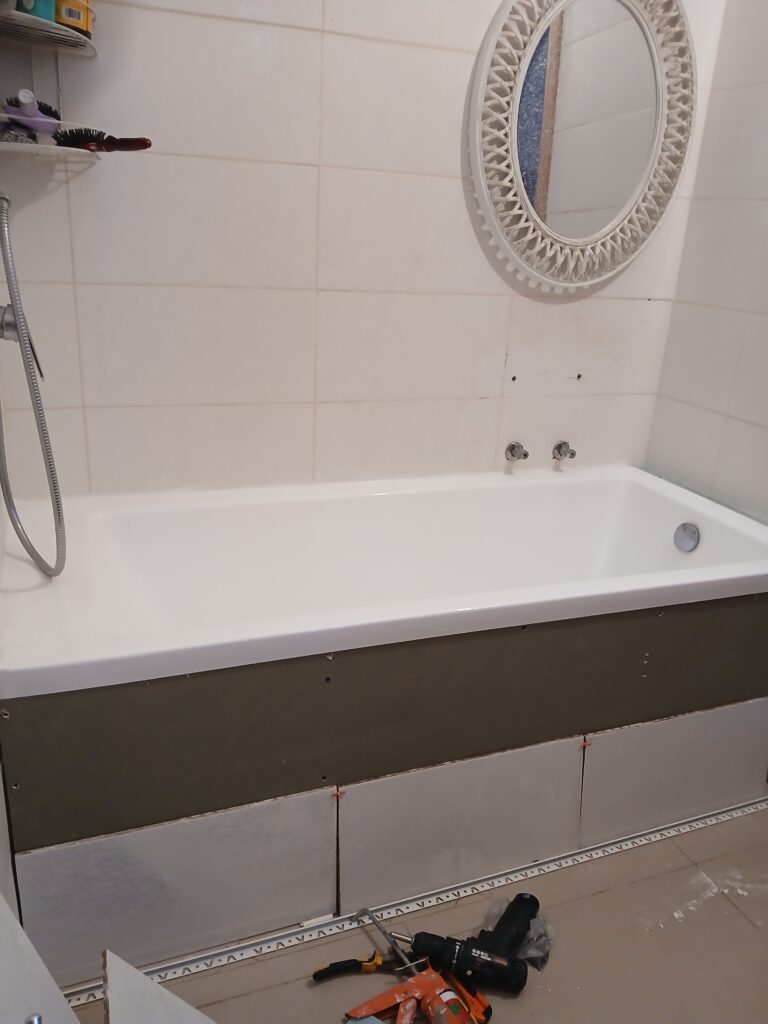
    My husband watched some videos to learn how to remove them from the wall in their entirety. Then he removed the tiles, until he had enough for our new bathtub surround.

    There was a good bit of other unseen work that needed to be done before he could begin setting the tiles, but finally there was visible progress being made. (Below, laying out the frst row of tiles.)

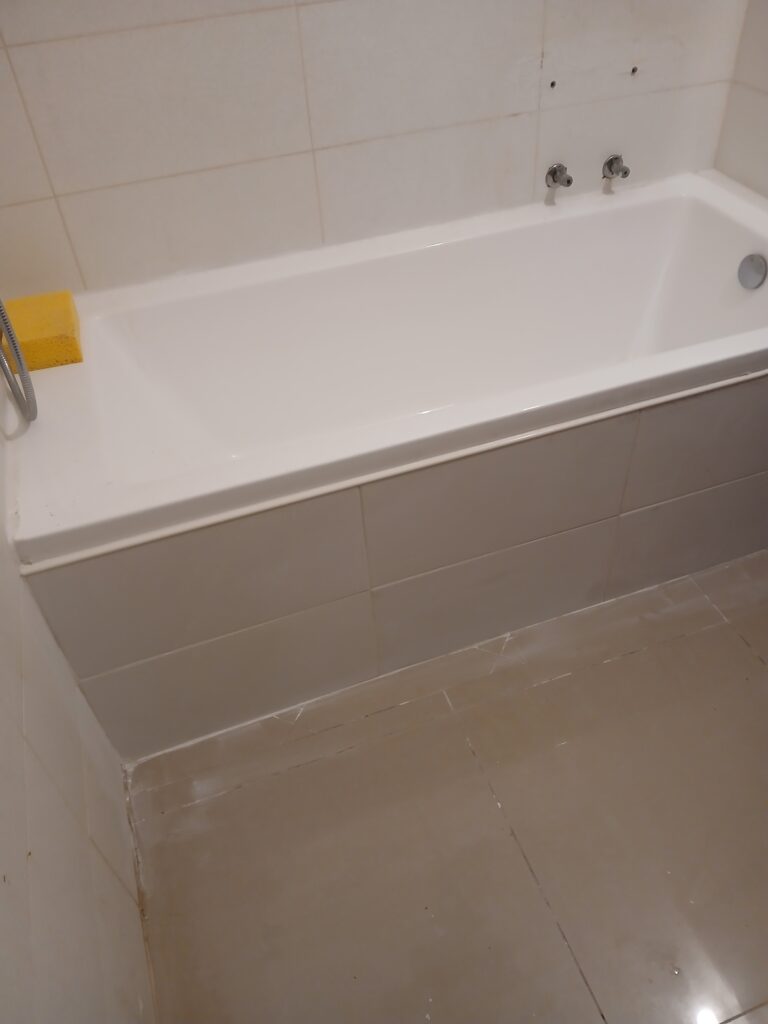
    (Below, the final results.)

    We’re both very pleased with how it turned out. He did a great job.

    There are a couple more details before we wrap up this project. One is the attach faucets on the wall where the sink was.

    The other is to replace the tile on the wall that has two holes drilled into it from when the sink was attached.

    But the biggest part of the project is finished; the other items can be taken care of relatively quickly.

    ————-

    While this project dragged out longer than my husband would have liked, he’s very, very happy to have a bathtub!

    The last couple of winters, he’s felt rundown and constantly under the weather. He kept wondering what he could do to boost his immune system, since he eats well, thinks positively, and exercises regularly.

    Voila! This winter has been dramatically better than the last two for him. He hasn’t had any cold symptoms nor the constant feeling of being under the weather. He attributes the dramatic improvement to his nightly bath, which is warming and invigorating.

    Avivah

  • Things I don’t buy

    In order to save, you have to have a gap between what you spend and what you earn. There’s no way around that. You can earn more, you can cut your costs, or both.

    Everyone is interested in big ways to save money, but those suggestions are limited: buy a used car, live in a less expensive neighborhood. There just aren’t that many big ways to save.

    However, there are endless ways to save in smaller ways, and they add up.

    Creating financial margin is also about what you don’t spend money on.

    Here are some of my spending choices. They aren’t recommendations for anyone else, though perhaps it will get your mental juices flowing about ways you can create more financial margin for yourself.

    Things I don’t buy/spend on:

    • We don’t go out to eat.
    • I buy most of the ingredients for our meals at a discount and plan around them.
    • I make almost everything from scratch.
    • I don’t order takeout, no matter how tired I am.
    • I don’t buy ready made freezer food.
    • I don’t buy premade snacks.
    • I don’t buy premade desserts or bakery items. The exception is sliced bread and pitas for school lunches, and sometimes Shabbos challah.
    • I don’t serve desserts during the week.
    • Takeout coffee or tea – I don’t drink coffee but I keep some in the house for visitors. I don’t buy creamers or flavored syrups.
    • Soft drinks, soda, lemonade, sweetened tea – we drink water and buy seltzer for Shabbos. I make and preserve our own juice.
    • Salad dressings – I make our own.
    • Condiments or spice blends – I make them.
    • Bottled water – when at home drink tap water. I have a filter but where I’m living, we have decent quality water. We fill water bottles to take with us when we go out,
    • Disposable dishes – I primarily use them twice a year when I have lots of guests for Sukkos and Pesach, but very little during the rest of the year.
    • Paper towels – I use rags and wash them.
    • Hair cuts – I give haircuts for the entire family
    • Hair products like hair oils, serums, styling gels, hairspray – I buy shampoo and conditioner.
    • Hair dyes
    • Scented bath products – epsom salts and some essential oils are all we use.
    • Skincare products: toners, cleansers, serums, exfoliators, face masks, sunscreens – I don’t use any of them.
    • Hand and body creams – I use shea butter and castor oil to make my own salves.
    • Cosmetics – I don’t use more than lipstick on a regular basis; my sister gifted me with high quality makeup before our second child’s wedding and now I have a lifetime supply.
    • Makeup wipes – soap and a washcloth does the job.
    • Nail polish – I don’t use it other than to label pans.
    • Beauty treatments – facials, botox, fillers – nope.
    • Manicures/pedicures – you can learn to do these for yourself if you care about them, but I don’t.
    • Scented candles, room fresheners – I don’t like artificial smells; we have an essential oil diffuser which is really nice but even that I rarely use.
    • Cleaning products – I stick with the basics: dish soap, laundry detergent, oxygen spray for clothing, and toilet cleaner. Once a year for Pesach I use a heavy duty oven cleaner. I made my own citrus cleanser/degreaser, but generally baking soda (bought in bulk), vinegar (bought in bulk) and elbow grease do the trick for just about all cleaning.
    • Floor wipes – I didn’t even know this was a thing until I took my mom shopping and she wanted them. I use a squeeze/sponja stick and washable rag to clean the floor.
    • I rarely use the dryer – I hang clothes outside to dry, and pay attention to the weather in the rainy season to take advantage of sunny days and do lots of laundry then.
    • Dryer sheets
    • Gym membership
    • Workout equipment
    • New or leased vehicles – we buy used cars that we pay for in cash.
    • Full service car wash – I don’t wash the car myself because our parking space is too far from my house for our hose to reach. Once a year I get a full cleaning done at the car wash. There are self-clean paid options for in between washes.
    • Scented sprays for the car
    • Vacations – we see our home as a place to enjoy being together. We don’t fly to destinations; we don’t stay in hotels. In the US we did yearly camping trips but since moving here have only done that once. (We’re talking about reinstating those.) We do paid day trips; for example, the older boys to a water park; the younger kids to an indoor amusement park. We have many hikes, picnics, and trips to the beach.
    • Cleaning help – I’ve never had paid cleaning help; we clean our own house.
    • Renovations – We’ve framed walls, replaced kitchens, put in a new bathroom, put up fencing, built decks, patios and pergolas, and tiled walls and floors. We do the work ourselves, so the costs are in time and materials. Still a big outlay though nothing compared to what it would cost to hire the work out. The exception that we pay for is plumbing and electricity.
    • Catering – I’ve self-catered every family gathering, bar mitzva, l’chaim, engagement party and sheva brachos meal for over three decades.
    • Impulse spending – when I go into a store, I get what I came for and don’t get distracted by things that look interesting.
    • Shopping as a hobby or therapy – I don’t go shopping to make myself feel better or because I’m bored.
    • I don’t shop to get an ingredient that I’ve run out of – I try to plan ahead but if I run short, I adjust my plans and use what I have.
    • We don’t smoke, drink or gamble, so no expenses on any of those things.
    • Jewelery – I have a minimum amount of real jewelery, and don’t have a desire to add to it. I occasionally buy some inexpensive costume jewelery to add some pizazz.
    • Purses, handbags – I only use one at a time, and replace it every couple of years. I buy new because I look for something specific, but it’s not expensive.
    • Magazines – I don’t buy them. A friend occasionally passes a pile of hers to me when she’s finished.
    • Very limited afterschool activities – once the kids are home, I don’t want them to go out for more activities.
    • Kids clothing – I buy as much as I can used, though not infrequently the ‘used’ clothing is new with tags from second hand sales.
    • Kids toys – I buy toys infrequently; when I buy, I get good quality that will stand up to a lot of use and last for years, and can be used in different ways to maximize the play value.
    • Kids books – I usually get from library sales or from community book exchanges. Occasionally I buy new books when it’s something I want to have; I bind or cover them with contact paper to keep them in good condition.
    • Home decor – I stay away from the ongoing purchase of whimsical, seasonal items.
    • New furniture – I buy good quality used items and maintain them.

    I try not to look at what others have, and not compare myself to anyone.

    A really strong principle for me is when I don’t have money for something, I won’t buy it. I don’t say, it’s a necessity so I’ll get it and figure out how to pay for it later. A friend many years ago told me she could never live like this, that it was too hard.

    Sometimes this has been hard but it kept us out of debt even at times that would have financially sunk most people. And by keeping that commitment to living within (and below) our means, as our income went up, it made it possible to put aside larger sums of money.

    Avivah

  • Gleaning free fruit

    I shared with you about my citrus trees and how much we’re enjoying harvesting them.

    Maybe you don’t have citrus trees – but there’s a good chance you can enjoy some free, freshly picked produce, too.

    This morning I was walking with my husband when we passed a pile of tree clippings. I always pause to see if there’s something I want to take a cutting of, and this time I saw one of the trees that had been pruned was a lemon tree. The prunings were filled with lemons.

    I picked the fruit that was easily accessible; I could see more but didn’t take it all. Here it is:

    This is one example of someone who has more than they can use, and the extra fruit has become a burden.

    Many people have fruit trees that produce more than they can use, and the fruit ends up wasted. On my daily walk I see trees loaded with fruits, with many fallen fruits on the ground below.

    If they have fruit trees, chances are good that they appreciate the fruits. Why would they not pick them? Maybe they have more than they can use, or their time and energy doesn’t allow them to harvest their trees. Maybe they moved into a home that already had fruit trees, and the fruit isn’t something that interests them.

    Many people would love to see the fruits being used, and a bonus is that their yards will stay clean of all the rotting fruit that would otherwise surround the trees.

    Obviously, some people might rather have the waste and mess rather than someone they don’t know coming into their space, and that is understandable. If someone came to me, I’d want to know they nice people, and weren’t going to destroy my trees, waste the fruit or make a mess in my yard.

    You might have people you already know who you can approach; it’s easiest to start with them. My next door neighbor has a lot of fruit and one of my married children asked me why I don’t ask to harvest their trees. The answer is that I have enough of my own! But she had told me I was welcome to pick if I wanted, that she doesn’t have time for it right now.

    Whether it’s someone you know or someone you’ve never met, before approaching someone with a fruit tree, keep in mind what their concerns might be. Be respectful, let them know you won’t leave a mess, and offer to give them some of the fruit you’ve picked. (I’ve never had anyone who wanted any of it, but some will.) You might want to bake them a pie or make some preserves with the fruit you picked that you’ll share with them.

    I started gleaning free fruit when someone on Craigs List posted they had lots of fruit free for the picking, so I went with my children and we picked a bunch.

    After seeing how happy the owners were that we came, I realized it was a mutually beneficial situation, and it didn’t look like we were poor and needy people who didn’t have money for food.

    I approached two different owners of apple trees, both within a few streets of my home, and both agreed.

    I approached the owner of two pear trees around the corner, and they agreed. None minded if I picked when they were there or not, and all were glad for the fruit to be used. One of them had children who watched us picking apples, and that made my children feel awkward.

    I used every bit of that fruit. Some I turned into compote, preserves and chutneys, and took some over to the owners, thanking them again.

    I have no doubt that I would still be able to pick those trees years later, based on the positive interactions we had.

    There are plenty of trees in the public domain that you can pick without asking anyone. Even without making much of an effort, we’ve found and picked carobs, dates, figs, and olives.

    Here in Israel the first tree we harvested was a pomegranate tree growing on our street. (You can see a picture of my then five year old with his haul.) My little boys picked loads of pomegranates from it, and from that time on, all the children in the neighborhood would pick them. But no one considered picking the fruit until then.

    Aside from the free fruit you get, it’s a nice activity, by yourself or with your family! You get out in the fresh air and sunshine, and it’s a wholesome and enjoyable activity.

    So don’t be bashful – if free, organic fruit interests you, give it a try!

    Avivah

  • 100% debt free!!! The mortgage is DONE!

    I have a 1995 book of daily meditations, and today’s meditation began with this quote:

    “If one advances confidently in the direction of his dreams, and endeavors to live the life which he has imagined, he will meet with a success unexpected in common hours.” Henry David Thoreau

    What a timely quote for me today, as I feel the truth of that in my bones.

    We met our goal of paying off our mortgage by the end of 2025 and are now 100% debt free!

    I am reluctant to share about this, just as I’ve been reluctant to share about our hardest financial times, and sometimes even reluctant to share about money saving strategies.

    I suppose then it was the fear I’d be looked down on as ‘poor’ or ‘cheap’, and now there’s the concern people will dismiss this accomplishment as ‘being lucky’.

    I have so many emotions and memories flooding me.

    I think about our house in Baltimore that we purchased at the top of the market in 2006. I began prepaying the mortgage on it and was making good progress, and then we decided to move to Israel in 2011.

    We couldn’t sell it because housing prices had fallen so much, so we rented it to a coworker of my husband who defaulted on the rent and trashed it. The costs to restore it while paying the mortgage were beyond our financial capacity.

    It ended up sold by the bank as a short sale. Only the bank benefited from my prepayments; we didn’t see a penny of profit from that home. We did, however, learn a lot of DIY skills thanks to all the work we did on the house. And of course we had a home to live in during those years where we made many good memories, so it wasn’t a complete loss.

    We bought our current home six years ago, and notwithstanding my past experience, I again made paying off the mortgage a priority. We bought below what we could afford, a fixer upper that needed a lot of work. We put the difference between the home we sold and the less expensive home we purchased towards the mortgage principal.

    We did almost all of the work to renovate ourselves, with most of the renovation expenses being spent on materials.

    Every tax return that we got went to the mortgage principal.

    We turned the second floor of our home into a summer vacation rental, and the extra profit went onto the principal.

    We refinanced at one point, upping our monthly payments and shortening the loan length.

    We did not inherit money or receive cash gifts to help with this.

    And of course the background during this time was that I continued to be intentional with my spending, continued to feel content with what I had, and even as our income increased, I didn’t succumb to lifestyle inflation.

    Two and a half years ago I asked my husband if I could take over the management of our finances. My husband did a fine job managing it all (even though he doesn’t enjoy it), but I find it fun and honestly, I’m really good at it.

    I asked to make this switch because we had made great progress, but to knock the mortgage completely out in the very ambitious timeline that I had in mind could only happen if I was laser focused. I needed to be managing the money to have that degree of focus.

    Despite having the same income and me being the main spender, we increased our savings rate by 30%. This took some deep digging, looking at every expense and paring each one down as much as I could! And every bit of that increased savings went to the principal.

    —————————

    In the last year the bank website has finally been updated and I’ve been able to make the early payments on their site. For each payment, there’s an option for ‘partial payoff’ or ‘full payoff’.

    This time, I clicked on ‘full payoff’, and filled in the transfer details from my bank to the mortgage bank for the full balance remaining.

    And then…it was done.

    No bells and whistles. No congratulatory emails or messages. It was just…finished. No physical deed to take possesion of, no mortgage note to burn. Within 30 days the paperwork in whatever office will automatically be completed.

    It was almost anticlimactic.

    But that was only on the outside.

    Internally, I’ve had so much emotion coming up that I couldn’t sleep for hours that night and the next, thinking about different financial challenges over the last three decades.

    I thought especially about the first few years after making aliyah, the most emotionally and economically trying period of our lives. Ten years ago being mortgage-free by this time would have seemed like a fantasy; I wouldn’t have even dared hope we’d be able to do this.

    I AM SO GRATEFUL! Just completely humbled and filled with gratitude.

    Avivah

  • Building resilience by paying down mortgage

    Whether you saw my last post about working on paying down our mortgage before a technical issue caused it to disappear or not, I’ll continue with related thoughts as to what motivated me to make paying off the mortgage a goal.

    I’ve always had a desire to be debt free, and other than our mortgage (and two car loans that each were two months long), we always have been. But the mortgage loan amount was so daunting that it was hard to believe that small extra amounts put onto the principal could make a difference.

    A few things happened that caused me to reevaluate an early paydown, and resulted in me focusing efforts on aggressively making extra principal payments.

    Five years ago, a medical product was being very strongly pushed to the people of the world, a push that was very, very strong in Israel. I was skeptical of a product that had intense marketing without demonstrated safety and efficacy studies being shared, and wasn’t interested in being a guinea pig.

    Many people who shared my hesitations felt compelled to participate since their employment was at risk. During this period I had a lot of anxiety about what would we do if my husband had to face that choice. As a one income family, how would we manage without his salary if push came to shove?

    Thankfully, though his company made recommendations to take it, he wasn’t faced with being fired.

    • I hated having to consider compromising our bodily autonomy because we were dependent on his job, and it highlighted to me that we didn’t have the financial resilience I wished we had.
    • From mid 2022 through 2023, due to rising interest rates and inflation, significant layoffs were made to the hi tech sector, which my husband’s job is associated with.
    • Around that same time, Chat GPT was released. I didn’t immediately think about the significance of that, but it wasn’t long before I felt concerned about the impacy of artificial intelligence on employment. The people who were most knowledgeable about AI were predicting many jobs would be lost in the coming five years, and it would be the white collar workers who would be the first to be downsized.

    Without being fearful or anxious, I considered what would help us weather potential job loss. Being free of a large monthly expense would make us more resilient in the event of a layoff.

    • The next thing was thinking about retirement. We were late to the game for building retirement funds, and I saw that the anticipated monthly amount we would have from my husband’s retirement account wouldn’t be enough to pay our monthly mortgage payment (which were scheduled to continue a few years into retirement), let alone living expenses.

    What if we didn’t have a mortgage? Would we still need such a large sum saved up? No. We could live on much less in retirement if we owned our home outright. The mortgage payment was a large monthly outlay we would no longer have, and we would need correspondingly less of retirement funds to cover our expenses.

    These were some of the primary factors in the last few years that coalesced into a burning desire to pay off our mortgage as quickly as possible. I viewed being mortgage-free as building a financial shield of sorts for our family.

    Is this the only way to be proactive financially? Obviously not. There are other ways to build resilience that may be better options for others. But this goal has been very motivating for me.

    Avivah

  • Reupholstering my bedroom set

    About seven years ago, I would wake up every morning with an aching back. I knew the problem was the mattress, but new mattresses are expensive and at the time I had no budget for any kind of mattresses.

    Soon after I began thinking how much I wanted new mattresses, I was walking somewhere with my kids. As I walked up the hill, I absentmindedly noticed that someone had put two twin mattresses to the side of the street for giveaway and glanced at them.

    I stopped in my tracks in disbelief. They were name brand mattresses in pristine condition, clearly swapped out by someone replacing them for a new set. I called a taxi company, asked them to send me a taxi with a roof rack, and took the mattresses home.

    When my neighbor saw us unloading them, he admiringly asked where we got them. He was shocked they weren’t new.

    The first night I slept on one my back stopped hurting. G-d sent me just what I needed, when I needed it! I felt so grateful and blessed.

    The mattresses were a meter wide, wider than our bedframes. I looked for used bedroom sets for a while, but 1 meter wide isn’t a standard Israeli bed size. Finally, it became apparent I wasn’t going to find used bedroom sets with the features I wanted that would fit our mattresses.

    I kept an eye on the furniture stores and when there was a sale on beds, went to a store where I was able to customize the bed size, the headboard design and the bottom of the bed design so it included a built in storage area underneath.

    I rarely buy new furniture and when these beds arrived, it was such a prosperous feeling. They were beautiful, they fit the mattresses perfectly, and they were exactly what I wanted. I was so happy with them.

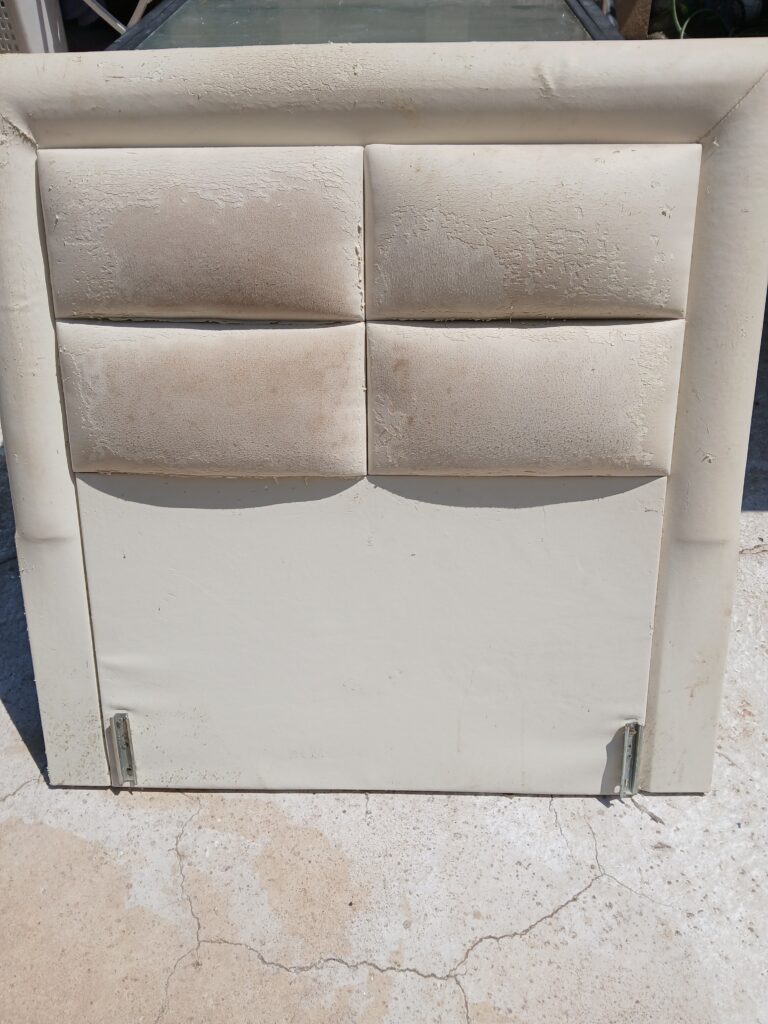
    But over time, I was dismayed to see the synthetic leather headboards and baseboards began to peel. I hadn’t had any previous experience with this material, but supposedly it was long lasting. It wasn’t.

    At first the peeling was very minor and hardly noticeable, but it got worse over time. Eventually, my beautiful beds looked shabby and beat up. I thought of buying new beds, but the mattresses are still in great condition, the beds are exactly what I want, and I really didn’t want to make the effort of buying new beds and having to sell our current beds. It was a lot of work I didn’t want to do.

    I felt a little stuck. I didn’t want to have beaten up furniture, but if I wasn’t going to buy new ones, something had to be done to make these look good. That meant reupholstering them, and the cost for professional upholstering would be formidable – not to mention needing to transport the furniture to the reupholsterer was more work I didn’t want to do.

    After thinking about my dilemma for quite a while, I decided to try reupholstering the beds myself. I figured that the worst thing that could happen was I would take them apart and do a bad job. Since I was already at the point of considering buying other beds, I wouldn’t have lost much if they didn’t turn out well and could move on to buying something new if I had to.

    I watched a few YouTube videos to get a sense of what was involved, and then I began.

    Here’s a picture of the first headboard before I started.

    I headed to the store and bought six meters of inexpensive black velvety material. Since it was going to be used on furniture that got minimal wear and I didn’t know what I was doing, spending on high quality fabric didn’t seem warranted.

    I took the headboard apart, and I learned that a headboard is basically just a piece of wood with smaller pieces of wood covered with foam and then fabric, all screwed together.

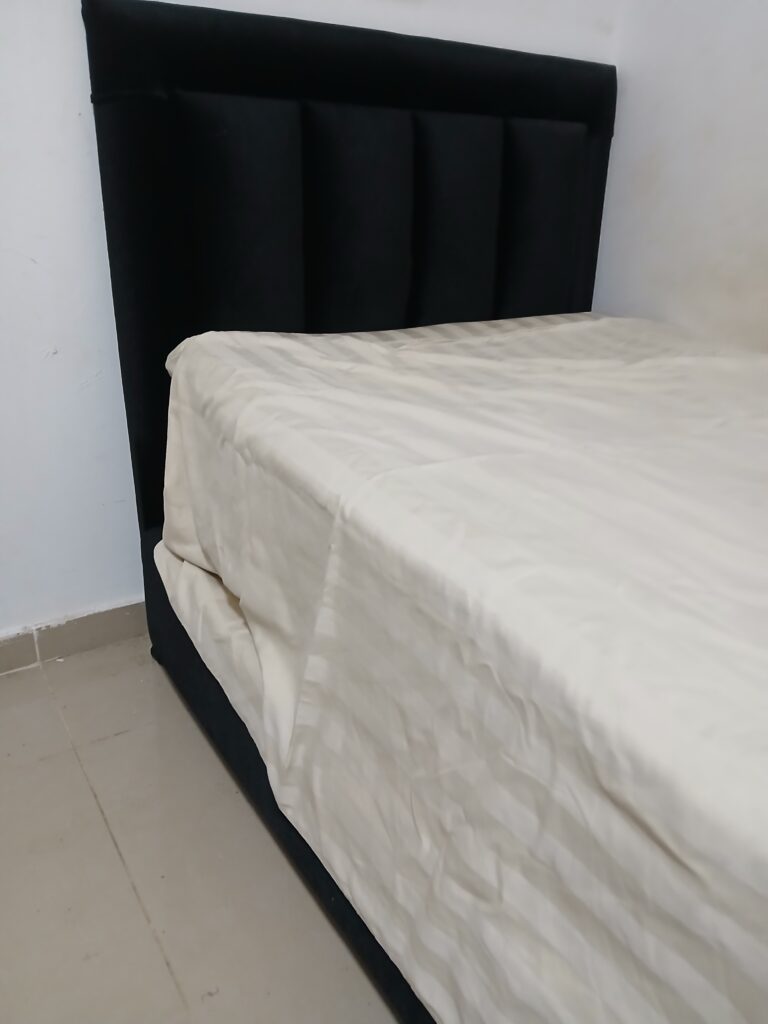
    Although when I ordered the beds the headboards were what I wanted, styles have changed and now I preferred a design running vertically rather than horizontally. I was pleasasantly surprised that rebuilding the headboard was easier than I expected.

    Here’s what the headboards look like now.

    Finishing the headboards was so gratifying.

    Then I moved on to the fabric frames of the bottom section of the bed. That was a little more challenging since I needed to maneuver into awkward spots inside the underbed storage area. But they also turned out beautifully.

    For 175 shekels of fabric and several mornings of my time, I was able to give new life to my bedroom set. I’m very happy with how they look!

    How do you think they turned out? Is this the kind of project you would do?

    Avivah

  • Saving money on groceries – loss leaders

    This full cart of groceries that cost just 400 shekels was filled with loss leaders. Today let’s talk about what loss leaders are and how to take advantage of these amazing prices.

    A common strategy is to offer very discounted prices on select items to get customers into stores. It’s known that once the shoppers are there, they’re likely to buy other items to fill in their shopping, items that are full price and have a high profit for the store. So they advertise the sales items that they don’t make money on, and maybe even lose money on – the loss leaders – to get you into the store.

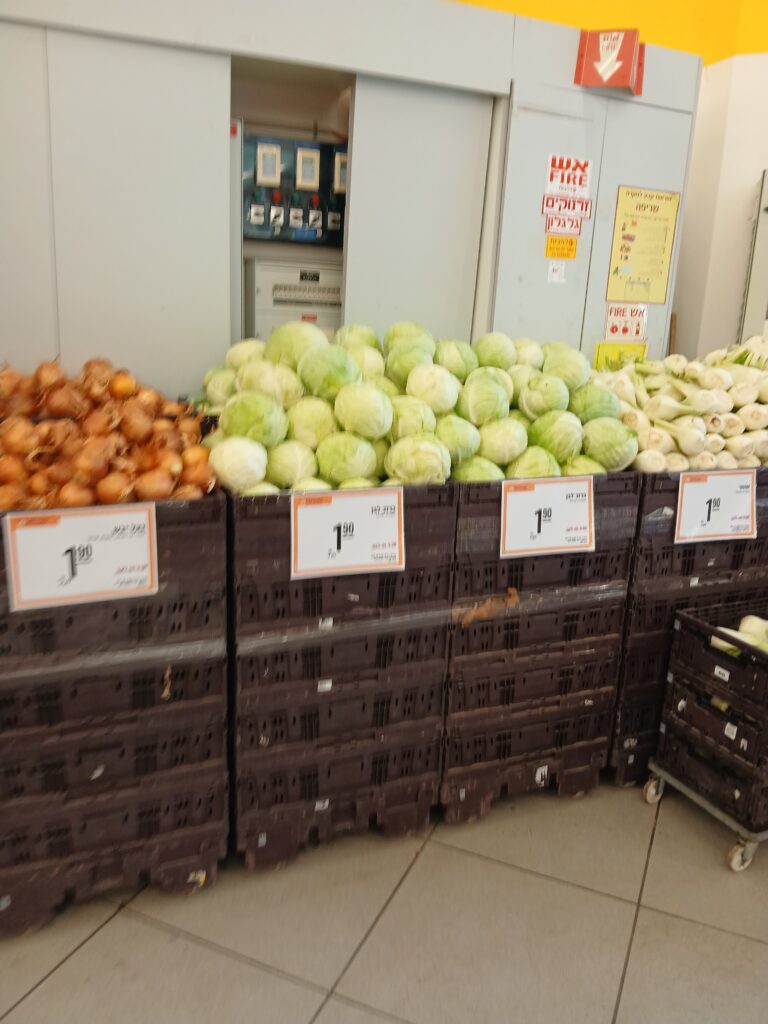
    Last week, loss leaders were carrots, onions and cabbage at 1.90 a kilo, and I bought a lot of them all. This week the onions and cabbage remain on sale, and fennel has been added to the sales line up so I got a big bagful of fennel.

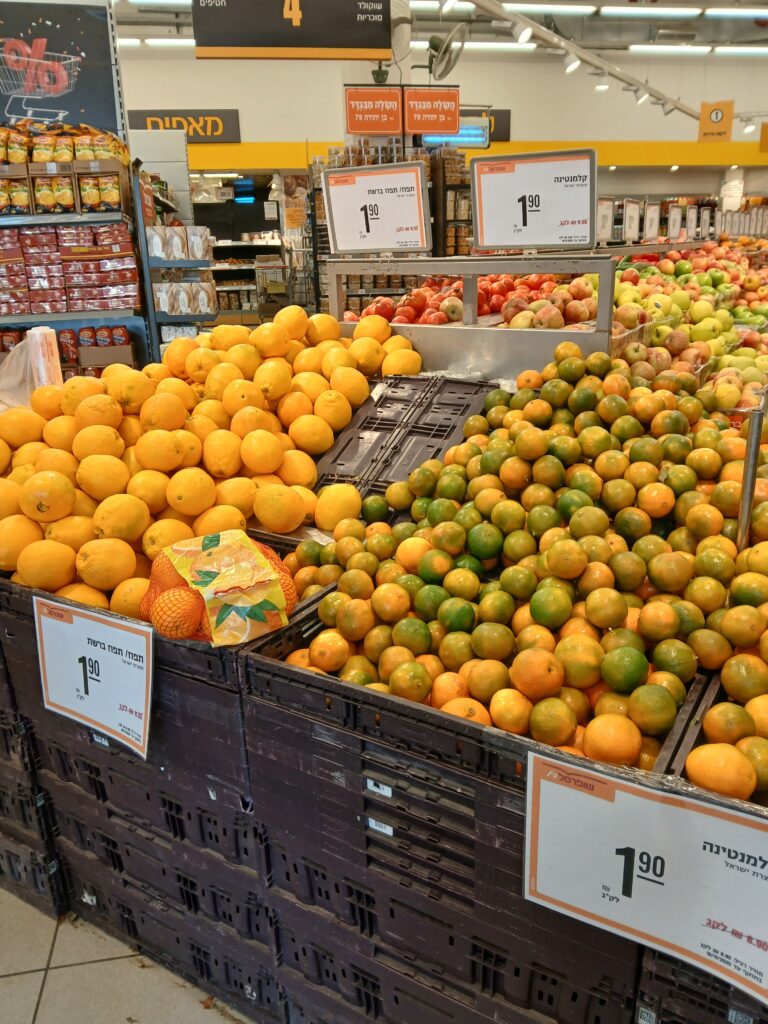
    They don’t usually have fruit as loss leaders in this store, but this week they had oranges and clementines on sale for 1.90, so I got two bags of clementines. The kids love having these in their lunch for school. (I have clementine and orange trees but the fruit on them isn’t yet ripe.)

    When you see a loss leader, how much do you buy? I try to get as much as I can realistically store and use before they go bad. Most produce stays fresh much longer than people think.

    How did I store what I bought last week?

    Cabbage has a long shelf life in the fridge, and can stay fresh for weeks out of the fridge if it’s super hot that time is obviously less.) I bought four large heads to make a big batch of sauerkraut with. Even though I didn’t have room for them in the fridge and haven’t yet gotten to making the sauerkraut, even with the hot weather we’re having (in the 90s), they’ve stayed just fine.

    Carrots also store well in a cool and dry spot. I keep the bags of carrots in the fridge.

    Onions store well in a cool, dry location. I have a four tier storage basket system in my kitchen where I keep produce that doesn’t need refrigeration, and now one and a half of those baskets are filled with onions. Onions last such a long time – months. Even in super hot weather, I’ve been able to keep onions without any special storage for weeks, though I did keep an eye on them in case something got soft so that it didn’t spoil.

    Here are the sweet potatoes that I bought last week at 3.90, now 9.90. Sweet potatoes last a long time stored in a cool, dry place. One of the baskets in my stacking system is filled with now filled with them, all bought at a discount. .

    Here are the avocadoes this week, also 9.90:

    We love avocados and eat a lot of them when they come into season. But not at this price point. I bought loads last week when they were loss leaders at 3.90 a kilo. I chose avocados that were rock hard; I keep in the fridge until I’m ready to take them out to ripen, a few at a time.

    Whenever you see a loss leader, think about how you can integrate them into your budget to maximize your savings. You’ll probably have to shift your way of thinking about grocery shopping, but it’s worth it – your home can be well stocked with groceries for much less than most people are paying.

    Avivah

  • Save money on groceries – figure out unit pricing

    We all know that with inflation, food prices have gone up and it’s impossible to stay in a budget.

    I want to reassure you that you can still keep to a budget using smart shopping strategies. Last week I emerged from Shufersal, not a cheap supermarket, with this big cart of groceries for 400 shekels. I did that by stacking my savings strategies, and today I’ll talk about one of them.

    One thing you need to pay attention to when grocery shopping are the prices per unit – not the total price. If something isn’t on sale, this is easy – the unit pricing will be on the price tag above or below the the item.

    Looking at the smaller print in the red section below the highlighted price in the picture above, we can see the regular unit price is 12.90 a kg. However, the unit sales price is never listed, so anytime you’re buying a sale item, you’ll need to figure the unit price yourself. In this case, 20 shekels divided by 3 is 6.66 a kilo. So this jasmine rice is almost fifty percent off the regular price, and if you like jasmine rice, it’s the time to stock up.

    However, there’s another rice also on sale: Thailand rice. The usual price is 7.90, and the sale price is 2 kilos for 12 shekels, so 6 shekels a kilo.

    The two options are now very similar in price: jasmine rice for 6.66 kg, or Thailand rice for 6 shekels a kg. What do you buy?

    In my case, I bought the jasmine rice, even though it was a little more expensive, because that’s what I preferred. But if the price difference was more significant, I would have gotten the less expensive one since I’m not enough of a rice connoisseur to spend much more on it.

    The unit pricing for the rice was easy to figure out. Sometimes you have to do a drop more figuring to know what’s the better price, since the packaging sizes aren’t consistent and it makes it more confusing for shoppers. To figure out what gives you the most value for your money, it’s worth pulling out a calculator if you’re not comfortable with mental computing.

    Below are the two different sizes of tomato paste on sale. There’s a tendency to assume that the larger packaging will always be less expensive, and often that’s true. But not always. So don’t assume.

    Above is a 260 gram package of tomato paste; it’s usual price is 4.90 each/1.88 per 100 grams (again, listed on the first line in the dark red below). So right away you can see that for 3 shekels a container, that’s a nice savings from the usual 4.90 price.

    Since I noticed that in the front of the store – located completely separately from these so it took more effort to price compare – there was tomato paste in 100 grams also on sale, I took the time to figure out the pricing for that.

    The usual price is 2.90 each/2.90 per 100 gram. At the regular price of both items, we can see that the smaller container is much more expensive. What about now that it’s on sale?

    First we need to figure out how much one container is: 15 divided by 12 is 1.25 per container/1.25 per 100 grams, so we can see this is also a good sale of more than fifty percent off. But is it a better price than the larger container above?

    To know that, we need to make one more calculation: how much is the unit sale pricing is for the larger container? To make a price comparison, we need to know how much 100 grams is for each one.

    To figure that out, we divide the total cost by the total weight in grams: 3 shekels for the larger container, divided by 260 grams is .0115 per gram, times 100 is 1.15 shekels per 100 grams.

    So what’s the better price? In this case, the large size at 1.15 per hundred grams is a better deal than 1.25 per hundred grams, even though the percentage savings on the smaller size is higher.

    Now, it may be more economical for you to buy the smaller size because you the bigger size is too much for you and would be wasted. But now you can make that decision based on the numbers.

    While it’s wordy to explain how to do price comparisons and sounds like it must be time consuming, it generally takes just a quick moment to do some figuring.

    Does all of this nit picky detail really make a difference to how much you spend on groceries? Yes, it matters tremendously because small things add up to big numbers. I routinely save thirty percent or more off my grocery shopping, by looking for sales and paying attention to unit pricing.

    Avivah

  • You do you, I’ll do me – not judging anyone for their choices

    It seems that my post about not spending money you don’t have rankled some readers.

    >>sorry, i think this post was super judgmental. no one should homeschool if it’s against their values because they can’t afford tuition in the school that aligns with their values, and if it carries a social/emotional cost. <<

    I would never, ever suggest to anyone that they make choices that don’t align with their values. I’m wondering why suggesting that people struggling with the costs of tuition consider other options seemed judgmental? I want to encourage people who feel they are financially drowning and feel doomed, who feel there’s no way out because this is the cost of life – I want them to think outside of the box so they can find contentment in living a life aligned with their values that is financially doable for them.

    If they can afford it and their lives are working for them, then there’s no reason to make a change. However, there are a lot of struggling families – a lot – and these are whom I’m addressing. I’d love to hear your suggestions on how families can minimize the struggle.

    The beginning of change is recognizing that something isn’t working in your life and you need to stop doing what you’re doing. You can’t make anything better until you reach this point. Once you are honest with yourself, it’s the beginning of finding solutions.

    You may not like my ideas that focus on each family taking personal responsibility to find a way out, but criticizing someone who suggests looking with a creative eye at how to live within ones means, isn’t constructive in finding solutions. I can validate how frustrating and difficult the struggle can be, but I’m not helping anyone to sympathetically agree, ‘yes, it’s impossible to live nowadays, of course you can’t manage’. And I can’t agree that if you want something you can have it regardless of your financial capacity. That’s not my belief and it’s not my lived experience.

    If it were easy to find solutions, then they’d already have been found. We’re going to have to do very creative or very hard things to change the direction things are moving in, as individuals or as a community. The cost of Orthodox Jewish life in the Tristate area of the US is reaching a crisis point (this is what was being discussed in the podcast I wrote my reflections on) and there’s a lot of community conversation happening about what to do. (While this was a specific community issue, it’s worth discussing since rising costs and the fear of not having what everyone around us has are affecting all communities.) I’m adding my thoughts to the wider discussion. As with everything, you can take them or leave them.

    I’ve never advocated homeschooling for everyone. Never. I wrote in the post following the one commented on: “I’m the first to agree that homeschooling isn’t for everyone. My point is that while educating one’s child is a need, there’s flexibility in where and how that education happens. When people begin to realize this, it can get their mental gears to brainstorm possibilities. This is my position about every expense: we have to separate between what is a need and what is a want, and find solutions so that our needs are met.”

    As I said in that post, I also suggested that people can look at less expensive communities, in which tuition is much more manageable. For example, I know someone living in a PA community where the school limits tuition to 15% of family income.

    >>ditto for seminary, if it’s an important life stage that you actively want your daughter to experience (from what i hear, excellent seminaries exist in the US, israel is not a requirement, but i can make a financial case for israel- a girl who experiences it and wants to remain here may end up costing the parents less as she marries).<<

    Like everything else, if it’s important to you and you can afford it, go ahead and pay for your child to have that experience. I’m not telling anyone how to spend their money. I’m grateful I was able to go to seminary in Israel and it was very impactful on my life, and I was able to do that because I worked hard to save money to attend. I’m saying if you can’t afford it, then you have to look for options or you need to accept you don’t have the financial resources you’d like to have.

    >> do you say the same about yeshiva gedola tuition for boys? that it’s “optional” if you can’t afford it? sure, in that case, send them to public school. it’s free. <<

    I’m very consistently saying the same thing, again and again. If you can’t afford something, you have to look for options. That doesn’t automatically mean doing without; that can also include possibilities that many have accessed such as asking for scholarships or requesting family assistance, work-study arrangements, or agreeing to pay a lower monthly tuition for more years. I’m sure many more things have been negotiated.

    >>no- we are moser nefesh (self sacrificing) to educate our children with our values, and there is value in having a mainstream school experience.<<

    Being self sacrificing means you’re giving something up in order to have this experience. Someone who is sacrificing is accepting that everything can’t be a priority. If you want to have one thing, making that choice ipso facto means you’re not going to be able to have another.

    Self sacrificing doesn’t mean we insist we can have whatever we want, whatever the cost. If something is important to you, find a way.

    >> and, yes, conformity is a basic human need. children who feel weird will make life decisions based on those childhood feelings, and that often backfires.<<

    Conformity isn’t a basic human need. Belonging is a basic human need. A person can conform and not belong. A person may not conform but still belong. You may think you need to conform in order to belong and there is some overlap, but they aren’t at all the same.

    >>from your posts, i understand that you and your family expend extraordinary time and effort to be frugal. <<

    No, we actually don’t spend extraordinary time and effort being frugal. Perhaps it seems that way because I detail various things we have done, with the intent to help others see there are different ways to achieve your goals. I don’t aspire to live in deprivation and lack, and my finances aren’t endless, so I choose to take alternative actions to live a life that is abundant to me.

    While we don’t spend enormous efforts being frugal, it would be accurate to say that we’re probably more intentional than most about spending our time and money in a way that gives us the most value.

    >>living where you do might be cheap and enjoyable, but you know better than i do that it has high external costs (e.g., waking up at 4am to commute to work by public transit, because you have one car and work is in the center of the country).<<

    Where I live isn’t cheap, and in fact many people considering moving here have been surprised and discouraged by the cost of housing. Yes, I do find it enjoyable to live here, and am grateful that by selling a smaller apartment in a more expensive part of the country we were able to buy a larger home here while keeping the housing costs the same.

    Your example of high external costs references a post in which I explained why we chose not to continue having two vehicles. I don’t think that’s a good example of the discomforts of living in a less central location. To clarify: my husband took the train even when we had a second car. The second car was used for him to drive to the train station instead of taking a bus there. We agreed to do without the second car and he takes two buses a week instead.

    He has the option to take our car to work if he wants and avoid public transportation altogether, but he chooses public transportation because it’s easier and less stressful than driving to Tel Aviv in rush hour traffic. While this may sound like something that would be difficult for your family, for us it’s not a high cost at all, but a choice we’ve made that fits who we are and what we want for our lives.

    >>our family’s cost-benefit analysis is different, which you address in your post, and we aren’t in any debt, but it’s irrespective of the objective cost of living. we’re planning a simcha now BH, and are being very mindful of staying at the lowest end of acceptable – as we’ve done for all our previous simchas- and at the same time making sure we’re not weird outliers. thankfully we’ve chosen a community where the standard is very affordable.<<

    That’s wonderful! You’re making choices that work for you. That’s what my message is, for everyone to make choices that work for them.

    Regarding the two comments you made about being weird, I’ll simply state that my family and children are all well integrated into our/their communities. Even though I refrain from sharing the positive sentiments regularly expressed about our family, it’s because I think it’s unseemly for the ‘rich’ to flaunt their ‘wealth’, not because we’re ‘weird outliers’.

    Avivah
  • Getting maximum value out of company lunch vouchers

    As I out of the supermarket with a full cart of groceries for just 400 shekels this morning, I was thinking about sharing the different ways I saved on this purchase with you.

    Then I realized that it might be more helpful for you if I detail each strategy separately.

    The first thing that would surprise people is the store I was shopping at: Shufersal. This is one of Israel’s more expensive supermarket chains, so why am I shopping there?

    A common perk that companies give to workers in Israel are vouchers towards lunch for the days they work; ours is called Ten Bis.

    For years we didn’t get much use out of this perk, since the daily sum wasn’t enough to cover whatever my husband would have wanted to eat at the providers that accepted them. It was cheaper for him to take lunch from home than to pay out of pocket to subsidize the restaurant meal.

    At some point the policy changed, and the Ten Bis credits could be used toward food purchases at specific supermarkets (naturally, only the expensive ones like Shufersal); the money for the month was loaded for each employee at the beginning of the month. This was good news, as finally this perk could benefit our family food budget.

    For a few years, my husband would load the sum onto paper coupons loaded for 100 or 200 shekels each. Once printed, they were able to be used for months. I had to keep a running balance in my mind as I shopped, since I wanted to stay very close to the voucher amounts.

    However, I began having problems with the printed vouchers occasionally not scanning properly. It was unpredictable and very frustrating to get up to the register only to find out that the coupons weren’t usable. (One time someone behind me in line saw this and offered to pay for my purchases for me; after thanking him for his thoughtfulness, I reassured him I had enough money, it was just a technical issue.) I began dreading paying with them, not knowing if they would go through at the checkout or not.

    We applied for refunds for these unused coupons that showed error codes when scanned, but never got money back for any of them, so those were a complete loss of hundreds of shekels.

    Also, if the coupons were lost, damaged or you didn’t use them in time, you would lose the value of them.

    One day I was complaining to my husband about the coupons not predictably scanning, and he told me there is an option to load the lunch credits onto a supermarket card, and asked me if I wanted him to do that. I did, and I’ve been really happy with this option. It allows me to pay exactly for what I’ve bought, and not have to add on items to round off to the coupon amount.

    The only caveat that I was unaware of for the first couple of months, is that when there’s a balance remaining at the end of the month, it disappears on the first of the new month. I purposely didn’t use my full balance since I didn’t need it at that time, planning to save it for the following month. The first time teh money from the previous month disappeared I thought I must not have remembered my balance correctly, but the second month I had left several hundred shekels on my card so I was positive it was gone. I was disappointed that I hadn’t realized this from the beginning, but that was my own lack of awareness of the parameters of using the card. Now I’m careful to spend the balance before the end of the month.

    Overall, shopping with the Ten Bis card has been easy and drama free. No more technical payment refusals, and the money loads onto the card without having to do anything extra like print them out.

    You have to register at the supermarket from the list of available stores before you can use this. Sign up! You can buy a lot more in groceries than the prepared food you would otherwise get.

    In my next posts, I’ll share about shopping strategies that work even in an expensive supermarket.

    Avivah